Opportunity
Opportunity
Environmental Control Systems are the most energy demanding sub-system aboard commercial aircraft.
Non-propulsive systems utilize up to 7% of engine power.
Environmental control systems consume 75% of non-propulsive power.
The major factors in ECS power consumption are compressing external fresh air and additional drag due to ram air intake.
PROJECT OBJECTIVE
Implement innovative technologies to reduce ECS power consumption
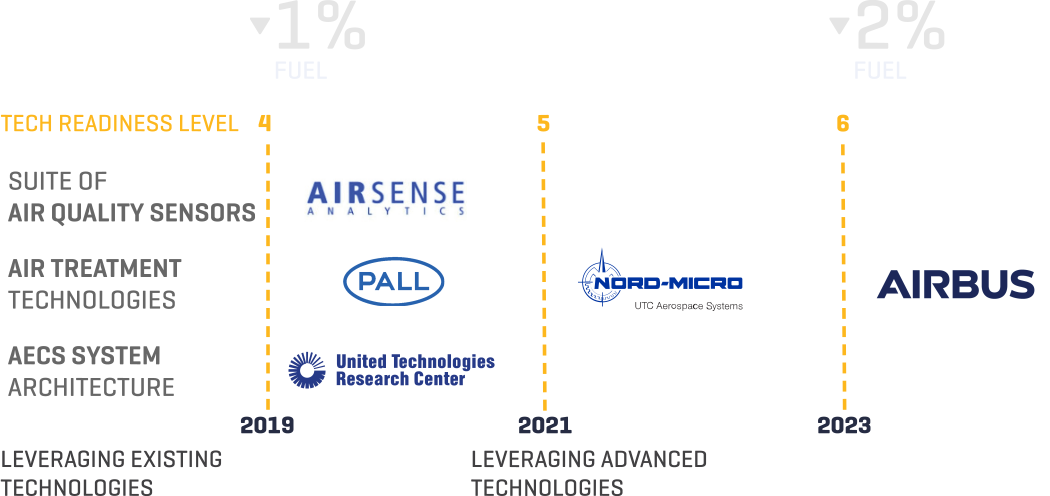
Resulting in 2% engine fuel burn reduction
How it Works
Current Environmental Control Systems (ECSs)
typically combine outside air and recirculated air from the cabin. There is no direct control of cabin air quality levels.
Adaptive Environmental Control System (aECS)
adds adaptive external air flow regulation.
adds adaptive external air flow regulation.
Air quality sensors
Highly sensitive, low drift, and long-life sensor suite capable of detecting gaseous contaminants below the levels which are considered dangerous to health
CO2 and VOC filters
Efficient and long-life gas purification system capable of reliably removing hazardous species when necessary
Adaptive flow control valve
Regulates air treatment and optimizes the mixing of outside and treated recirculated air
RESULT:
Reducing the outside air intake and increasing air recirculation can result in fuel savings without affecting cabin air quality
PARTNERS
| KEY CAPABILITIES & PRODUCTS | TASKS | |
| United Technologies Research Center |
|
|
| Nord Micro UTC Aerospace Systems |
|
|
| PALL Aerospace |
|
|
| Airsense Analytics |
|
|
TIMELINE